
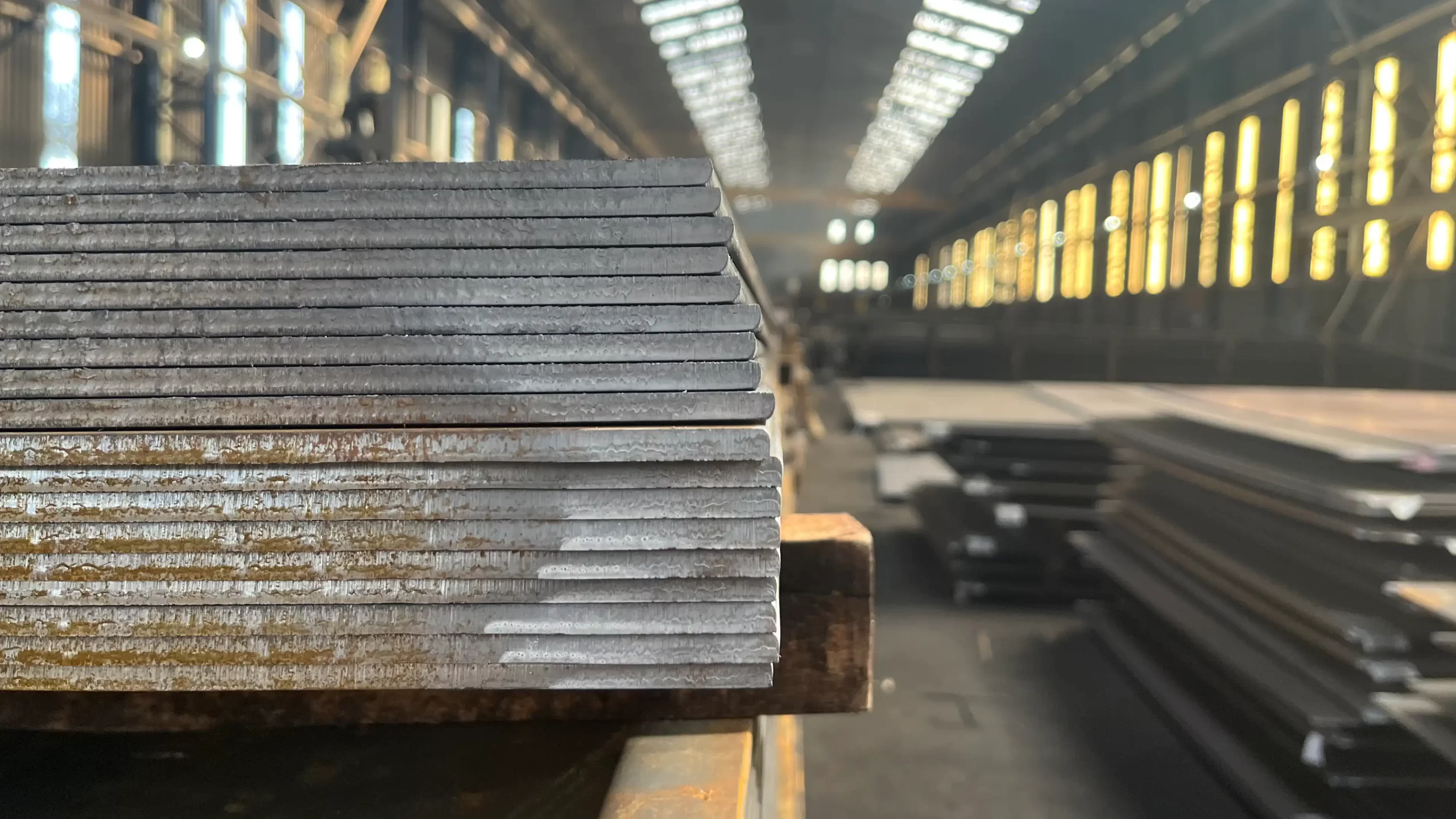
Hot-rolled steel sheets can offer practical value for South African fabrication, construction, and manufacturing projects, but their performance depends on the specification. Quantum Steel encourages buyers to consider the grade, thickness, finish, and intended application together. The best-value sheet meets the job’s requirements with the least avoidable rework.
Imagine two fabrication orders arriving at a Johannesburg workshop. Both call for steel sheets of the same thickness. One will become a painted equipment cover; the other will become a component that carries a defined load. The sheets may look similar, but the purchasing decisions should differ.
For the cover, surface preparation and appearance may drive the choice. For the loaded component, verified mechanical properties and the engineer’s specification take centre stage. Buying both simply as “hot-rolled steel” leaves too much unanswered.
This illustrative scenario highlights an overlooked part of steel procurement: a material’s purchase price is only one part of its eventual cost. How it fits the design, moves through fabrication, and performs in service matters just as much.
What Are Hot-Rolled Steel Sheets?
Hot-rolled steel sheets are flat steel products made by rolling steel at temperatures above its recrystallisation temperature. At this stage, the material can be reduced in thickness through successive rolling passes. Depending on the production route, the resulting strip may be coiled, then uncoiled, levelled, and cut into sheets.
In the untreated, as-rolled condition, the surface usually carries a dark oxide layer called mill scale. This gives hot-rolled material its familiar industrial appearance. Its surface is generally less smooth than that of cold-rolled sheet, and the applicable dimensional tolerances differ.
However, “hot-rolled” doesn’t identify a single steel grade. It describes how the steel was processed. The grade and delivery condition establish the material requirements relevant to strength, ductility, and fabrication.
Hot-rolled steel sheets form part of our flat-steel range, alongside cold-rolled sheets, galvanised sheets, and commercial-quality and graded sheet and plate. This gives buyers a starting point for discussing which product category fits their project.
Why Hot-Rolled Steel Sheets Suit Many Industrial Jobs
Industrial components don’t all need a highly refined surface. Many need a suitable combination of strength, formability, availability, and cost, followed by appropriate fabrication and finishing.
Hot-rolled steel sheet can meet these needs in a wide range of applications. The key is to select a grade that matches the duty and the intended manufacturing process.
Practical value where surface perfection is unnecessary
For applications such as internal panels, equipment covers, and general fabricated components, a premium surface finish may add little functional value. An appropriate hot-rolled product can therefore make commercial sense.
That doesn’t mean surface condition can be ignored. If the finished component will be painted or coated, the preparation requirements still belong in the budget. A lower material price is less attractive if the project later needs substantial unplanned finishing work.
Flexibility across fabrication processes
Suitable hot-rolled grades can be cut, formed, and welded by professional fabricators. Their usefulness comes from being adaptable to different component designs, rather than being restricted to a single end product.
These capabilities are grade-dependent. A material suitable for a relatively simple cover may not suit a demanding formed component. Similarly, the welding requirements depend on the steel’s composition, thickness, and service conditions.
A useful starting material for repeat production
For manufacturers producing recurring components, consistent specifications simplify procurement and production planning. Clearly defined sheet dimensions, tolerances, and material requirements help make successive orders comparable.
This is particularly useful when purchasing and production are handled by different teams. A complete specification carries the design intent from the drawing through to the delivery.
Industrial Applications in South Africa
Across South Africa’s industrial economy, flat steel becomes a wide variety of useful components. The examples below show where hot-rolled steel sheets may be considered, subject to the application’s engineering and fabrication requirements.
General Engineering and Manufacturing
Equipment housings, access covers, mounting components, brackets, and fabricated panels are among the potential applications for suitable hot-rolled steel sheet.
The important question is what each component must do. A cover intended to keep dust away from equipment has different requirements from a mounting component supporting machinery. Even within one assembly, different material specifications may be appropriate.
For a Gauteng manufacturer, identifying those differences before ordering can help prevent a single, overly broad material description from being applied to every part.
Construction and Building Fabrication
Hot-rolled steel sheet can be used in fabricated building components, connection details, and general construction metalwork where the specified grade and thickness are suitable.
Care is needed when moving from general fabrication into structural work. A commercial-quality sheet shouldn’t be assumed to provide the guaranteed properties required by a structural design. Load-bearing components must follow the relevant engineering specification.
Sheet and plate terminology can also vary between suppliers and product standards. For thicker components, a plate product may be the appropriate choice. Supplying the actual thickness and material designation is clearer than relying on the word “sheet” alone.
Agricultural Equipment
Agricultural fabrication may include guards, covers, bins, panels, and other equipment components made from appropriately selected flat steel.
The working environment matters. A component exposed to weather, fertiliser residues, or repeated abrasion faces different demands from a protected indoor panel. The steel specification, protective finish, and expected maintenance should reflect those conditions.
Choosing a thicker sheet alone doesn’t resolve every durability problem. The cause of deterioration might be corrosion, abrasion, impact, or a combination of factors.
Mining and Materials Handling
Mining operations and their supporting workshops use fabricated steel components throughout their facilities. Suitable hot-rolled steel sheet may be considered for equipment covers, guards, and selected fabricated assemblies.
However, ordinary mild steel sheet shouldn’t automatically be selected for severe abrasive duty. A component in direct contact with moving mineral material may require a specialist wear-resistant product.
Our broader product range includes hard-wearing plates, allowing enquiries involving wear to be considered separately from general sheet requirements. The distinction matters because a material that performs adequately as an enclosure may wear rapidly as a liner.
Transport and Vehicle-Related Fabrication
Appropriate hot-rolled grades may be used for selected trailer panels, brackets, and vehicle-related fabricated components.
Transport applications can involve vibration, repeated loading, and weight constraints. The material choice must therefore follow the component design, rather than a general assumption that any steel of the correct thickness will work.
Where fatigue performance or safety-critical loading is involved, the grade, joints, and fabrication quality all need specific consideration.
Hot-Rolled, Cold-Rolled, or Galvanised Sheet?
These terms describe different aspects of a steel product. Hot rolling and cold rolling relate to processing, while galvanising refers to a zinc coating that provides corrosion protection. A useful comparison starts with the finished component’s needs.
| Product category | Main consideration | Questions to ask before ordering |
| Hot-rolled steel sheets | Practical flat steel for many fabrication applications, with surface condition and tolerances to consider | Does the grade meet the duty, and what preparation will the final finish require? |
| Cold-rolled steel sheets | Generally smoother surfaces and tighter thickness control than comparable hot-rolled products | Does the part need the improved surface or dimensional control? |
| Galvanised steel sheets | Zinc-coated sheet for applications requiring corrosion protection | Are the coating, forming requirements, and exposure conditions compatible? |
| Graded steel plate | Specified properties for applications requiring the relevant plate grade and thickness | What does the engineering specification require? |
| Hard-wearing plate | Resistance to abrasive wear in suitable applications | Is abrasion a primary cause of component failure? |
No category is automatically the best choice for every job. A painted industrial cover, an exposed outdoor panel, and an abrasive liner each place different demands on the material.
The Hidden Cost: What Happens After Delivery?
The most useful way to compare steel options is to follow the material beyond the quotation.
- What happens when it reaches the workshop?
- How much becomes usable components?
- Does the surface need additional preparation?
- Will the parts fit the assembly within the specified tolerances?
Consider a hypothetical batch of equipment panels. One sheet format might carry a slightly lower price per kilogram, yet leave awkward offcuts after the parts are laid out. Another format might use the material more efficiently. The lower unit price does not necessarily produce the lower cost per finished panel.
The same logic applies to finishing. If a prominent painted surface needs extensive preparation, the apparent saving on the starting material may shrink. Equally, paying for a smoother sheet where appearance has no practical importance may increase cost unnecessarily.
A realistic comparison includes:
- Material cost and usable yield
- Cutting, forming, and assembly requirements
- Surface preparation and the final protective finish
- Inspection, documentation, and acceptance requirements
- Transport, handling, and production timing
This approach gives purchasing teams a more useful target: the cost of an acceptable finished component.
Five Details to Confirm Before Ordering
A precise enquiry helps us understand the material requirement and discuss suitable supply options. It also reduces the risk of different quotations describing different products.
1. Grade and Intended Use
Include the specified grade or standard where one exists. Explain whether the material is for a general cover, formed component, structural detail, or another application.
If the drawing doesn’t identify a grade but the component carries a defined load, resolve that requirement with the responsible designer before selecting a substitute. A supplier’s product description doesn’t replace engineering approval.
2. Thickness and Sheet Dimensions
State thickness, width, and length, together with quantities. Confirm any critical tolerances, particularly where the sheet must fit an existing assembly or automated production process.
Thickness alone isn‘t a complete specification. Width, length, flatness, and the acceptable dimensional variation can all affect the result.
3. Surface Condition and Final Finish
Explain whether the steel will remain visible, receive a decorative coating, or operate in an environment requiring corrosion protection.
Mill scale isn’t a dependable substitute for a protective coating. Professional surface preparation should be specified to suit the chosen coating system. This is especially relevant where a finished part will face coastal air, persistent moisture, or industrial contamination.
4. Documentation Requirements
Identify any required material certificates, traceability, or inspection documentation at quotation stage. Their availability should be confirmed for the particular product and order.
Doing this early helps align the purchased material with the project’s acceptance requirements. It is much harder to resolve missing documentation after parts have been fabricated.
5. Timing and Delivery Arrangements
Provide the delivery location and required date, and discuss the receiving arrangements. Workshop access and unloading capacity can affect how an order should be scheduled.
Quantum Steel’s warehouse facilities and delivery fleet support our steel supply operation. Confirming availability and delivery arrangements for your specific order helps connect purchasing decisions with the production programme.
Planning for South African Service Conditions
South African projects operate in very different environments. A sheltered installation in Johannesburg and exposed equipment near the coast shouldn’t automatically receive the same corrosion-protection specification.
Agricultural equipment may encounter moisture and chemical residues. Mining-related components may face dust, abrasion, and impact. Indoor manufacturing equipment may have less demanding weather exposure but tighter assembly or finish requirements.
The practical lesson is to specify for the component’s actual location and duty. “Industrial use” is too broad to explain what the steel will encounter over its working life.
It also helps to think about replacement and maintenance. A material choice that reduces initial expenditure but requires frequent intervention may offer poor value, particularly when the component is difficult to access or its replacement interrupts production.
FAQs About Hot-Rolled Steel Sheets
What are hot-rolled steel sheets used for?
They are used in a range of general engineering, manufacturing, construction, agricultural, and transport-related applications. Examples include panels, covers, brackets, and fabricated components. Suitability depends on the grade, dimensions, fabrication method, and service conditions.
Are hot-rolled steel sheets the same as mild steel sheets?
Not necessarily. “Hot-rolled” describes a manufacturing process, while “mild steel” generally refers to low-carbon steel. A sheet can be both hot-rolled and mild steel, but neither term alone provides a complete material specification.
Can hot-rolled steel sheets rust?
Yes. Unprotected carbon steel can corrode when exposed to moisture and oxygen. The mill scale associated with hot rolling shouldn’t be relied upon as long-term corrosion protection. The appropriate finish depends on the service environment.
Can hot-rolled steel sheets be welded and bent?
Many suitable grades can be welded and formed by professional fabricators. The exact requirements depend on the grade, thickness, delivery condition, component design, and intended use. Confirm these details before fabrication.
Is cold-rolled steel always better than hot-rolled steel?
No. Cold-rolled sheet can offer advantages in surface finish and dimensional control, while hot-rolled sheet can be appropriate for many general fabrication applications. The best choice follows the specification and the total production cost.
What thicknesses and sizes can I order from Quantum Steel?
Contact our team with your required thickness, width, length, grade, and quantity. We can discuss the relevant supply options and confirm current availability for your enquiry. Don’t assume that every size or grade is immediately available.
What should I include when requesting a quotation?
Include the material grade, dimensions, quantity, intended application, required documentation, delivery location, and timing. Drawings and any critical tolerances help explain the requirement clearly.
Get the Right Hot-Rolled Steel Sheets for Your Next Project
Your next steel order should support the finished job from the outset. Quantum Steel supplies hot-rolled steel sheets as part of our broader flat-steel offering, with warehouse and delivery facilities supporting our service.
Send us your specification, dimensions, quantities, and delivery requirements. We will discuss the available options so you can move forward with a clearer purchasing decision.